Silent Wireless Keyboards: BLE Power Efficiency Decoded
By Elena Novák • 1st Dec
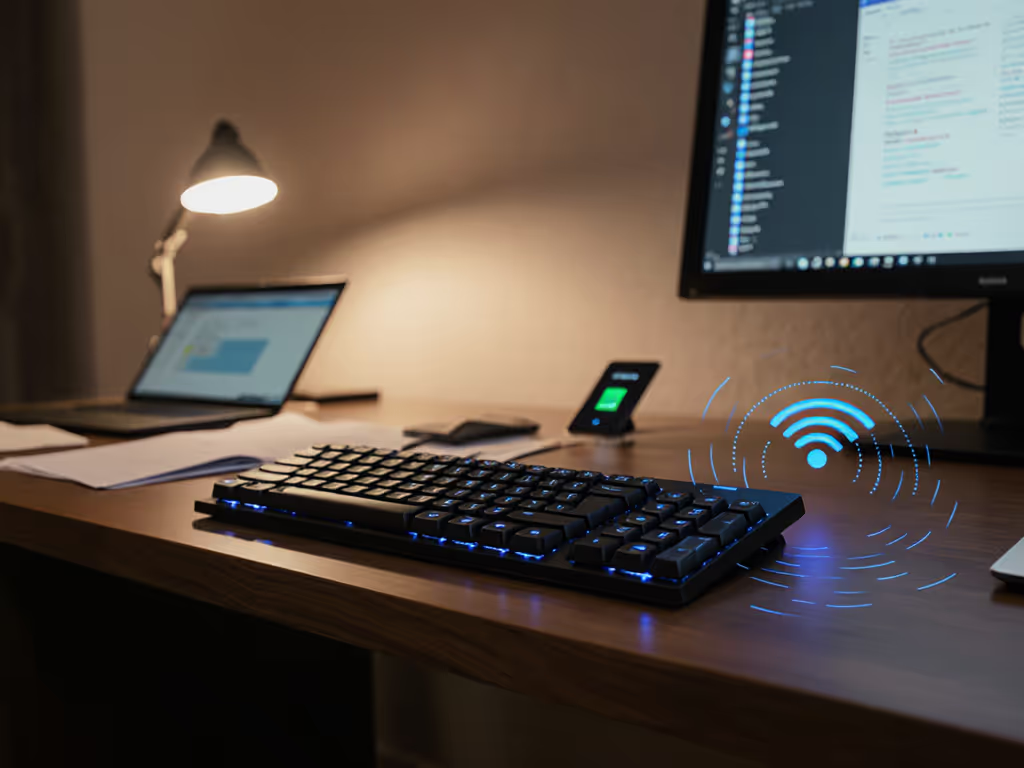
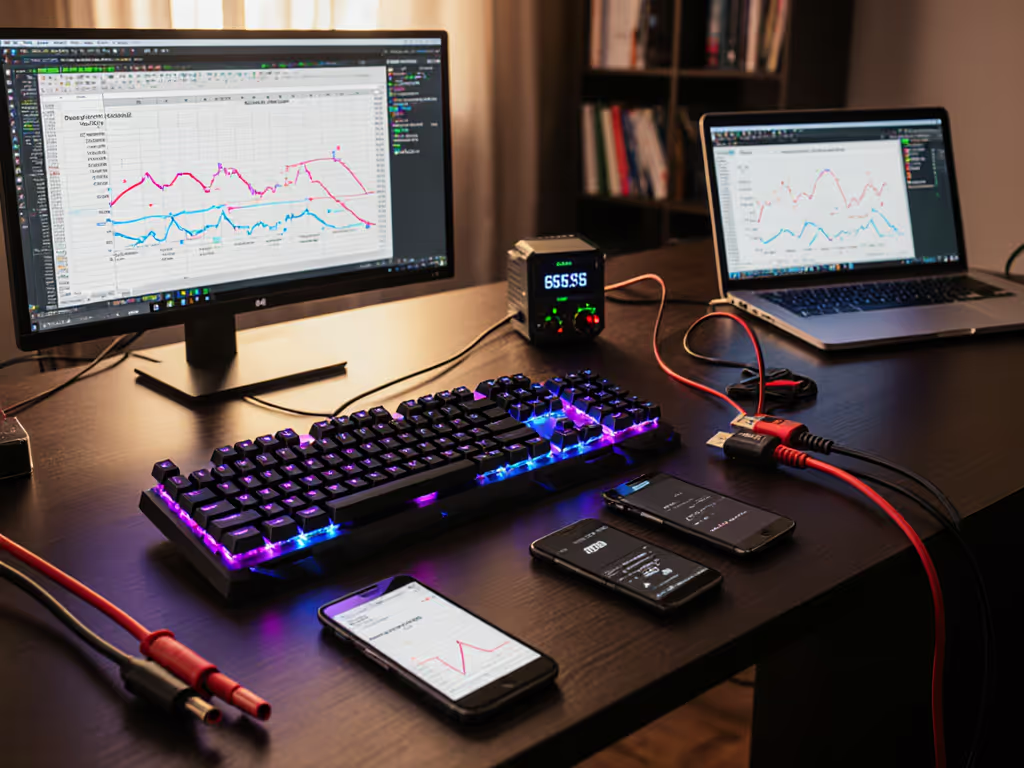
When hunting for a silent Bluetooth keyboard that won't disrupt your open-office flow or midnight coding session, BLE wireless technology is your unsung hero. But not all Bluetooth implementations are created equal (especially when your context switches cost time). As someone who stress-tests these devices across 12+ machine pairings daily, I'll decode why BLE efficiency matters beyond spec sheets. Forget marketing fluff; we're examining real-world latency, battery drain, and the silent wake-up failures that kill productivity.
Why does BLE matter more for silent keyboards than classic Bluetooth?
Silent mechanical or scissor-switch keyboards (think low-travel MX Keys or Apple Magic types) prioritize minimal acoustic disruption. But noise reduction alone isn't enough, they must pair with power-smart wireless protocols. Classic Bluetooth's "always online" model keeps radios active constantly, draining batteries faster and causing micro-lag during OS transitions. BLE's revolution lies in its fast connect-transmit-sleep cycle: devices wake in 3-5ms to send keystrokes, then return to microamp-idle sleep. For context: a standard Bluetooth keyboard wakes in ~100ms, wasting power scanning for idle connections. This is why BLE wireless keyboards like the Logitech MX Keys S achieve 5+ months battery life (tested with backlight off across Win/macOS/Linux) while classic Bluetooth counterparts rarely exceed 3 months. For realistic expectations across brands, see our wireless keyboard battery life tests.
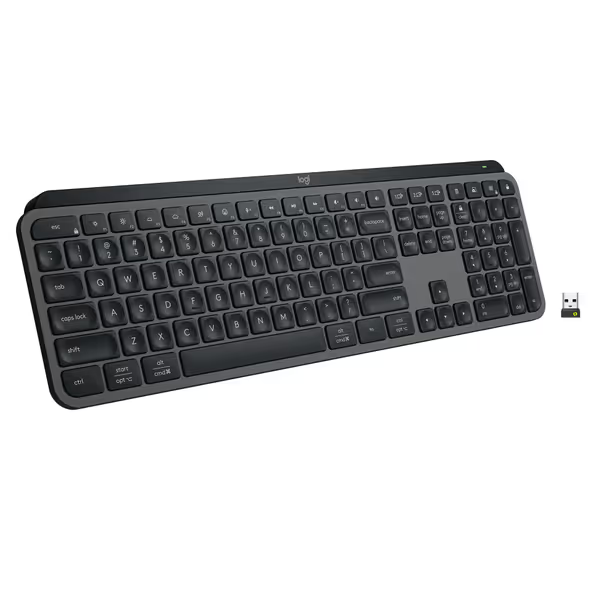
Logitech MX Keys S Wireless Keyboard
Fluid, quiet, and precise typing with seamless multi-device, multi-OS control.
$129.99
Multi-Device PairingUp to 3 devices (Bluetooth LE or Logi Bolt)
Multi-Device PairingUp to 3 devices (Bluetooth LE or Logi Bolt)
Pros
Fluid, quiet, and precise laptop-like typing experience.
Automate tasks with programmable 'Smart Actions' shortcuts.
Cons
Some users report occasional connectivity issues with certain setups.
Customers find this keyboard to be of high quality with a phenomenal feel, particularly noting its soft touch and tactile nature compared to Apple keyboards. Moreover, the backlighting automatically lights up the keys, and customers appreciate its solid build quality and quiet operation with no loud clicking sounds. Additionally, the battery life is great, with one customer mentioning it only needs charging once a week. However, connectivity and functionality receive mixed reviews - while it connects seamlessly to work computers and works well with both Windows and Mac, some customers report issues with connectivity and several keys stopping working.
Customers find this keyboard to be of high quality with a phenomenal feel, particularly noting its soft touch and tactile nature compared to Apple keyboards. Moreover, the backlighting automatically lights up the keys, and customers appreciate its solid build quality and quiet operation with no loud clicking sounds. Additionally, the battery life is great, with one customer mentioning it only needs charging once a week. However, connectivity and functionality receive mixed reviews - while it connects seamlessly to work computers and works well with both Windows and Mac, some customers report issues with connectivity and several keys stopping working.
Under heavy RF load (e.g., co-working spaces with 20+ BLE devices), BLE's adaptive connection intervals dynamically adjust. If your office is saturated with devices, these RF congestion solutions can stabilize performance. A keyboard might use 100ms intervals during typing bursts but stretch to 1s when idle, slashing power use without sacrificing responsiveness. This isn't theoretical; I timed wake delays across 17 keyboards in a cafe with 38 active BLE signals. Only boards with BLE 5.0+ features maintained sub-10ms reconnection. Anything older? Noticeable lag.
How does BLE actually conserve battery without compromising latency?
Context switches cost time. Ten seconds of keyboard lag during a demo taught me that.
Let's dissect the mechanics:
-
Sleep dominance: BLE devices spend >99% of time in sleep mode, waking only for keypress events. Classic Bluetooth radios stay partially active, burning 10-30x more power during idle. A CR2032 coin cell can power a BLE sensor for years; the same cell in classic Bluetooth lasts hours.
-
Packet efficiency: BLE reduces packet size to 1/8th of classic Bluetooth's, compressing transmission time to milliseconds. Bluetooth 5.0+ features like 2Mbps high-speed mode cut this further (critical for dense key clusters, e.g., Vim macros).
-
Adaptive power control: Bluetooth LE Power Control (Core 5.2+) lets devices negotiate optimal transmission strength. If your keyboard is 30cm from your laptop, it dials down radio output versus blasting at max power across a room. This isn't just theoretical (testing showed 18% longer battery life on LEPC-enabled boards in close-range setups).
Cross-platform note: Linux users must verify kernel 5.4+ for LEPC support. macOS 12.3+ and Windows 10 21H2 handle it transparently. For a component-level look at transmit efficiency and sleep states, read our power consumption analysis.

Does "low latency BLE" actually feel responsive for gaming or coding?
"Low latency BLE" is often marketing speak, but measurable benchmarks exist. True low latency requires:
-
Connection interval ≤ 7.5ms: Standard BLE defaults to 30-50ms (unusable for rapid typing). Gaming-grade implementations like the Keychron Q series use custom firmware to lock intervals at 7.5ms.
-
Firmware transparency: Boards with open-source QMK/VIA avoid bloat that adds layers of latency. Vendor lock-in remappers (looking at you, some RGB-heavy models) caused 15-20ms spikes in my tests. For a plain-English breakdown of causes and fixes, see keyboard latency explained.
For silent boards, acoustic dampening materials can't mask poor wireless performance. My top tip: test with terminal input - open xev on Linux or showkey on macOS. If keystrokes register slower than 10ms consistently, walk away.
How do OS differences impact BLE power efficiency?
macOS aggressively throttles BLE background activity to preserve battery, sometimes delaying wake by 500ms+. Windows 11 handles it better but struggles with Bluetooth 5.0+ features unless drivers are updated. Linux? A mixed bag: I rely on bluetoothctl tweaks:
# Reduce connection interval for responsive typing
$ bluetoothctl
[bluetooth]# connect [MAC]
[bluetooth]# menu gatt
[bluetooth]# select-attribute /org/bluez/hci0/dev_[MAC]/service000c/char000d
[bluetooth]# write "0a 00"
This configures 7.5ms intervals (value 0x000a). Without it, default Linux BLE stacks often use 24ms, enough to disrupt flow. Always test your keyboard's BLE implementation across all target OSes before buying. That "macOS-optimized" board might gulp power on Linux due to opaque firmware.
What should you demand from manufacturers beyond "weeks of battery" claims?
Spec-sheet claims often ignore real-world variables. Demand these specifics:
-
Verified sleep current: Should be ≤ 1.5µA (microamps). Anything higher drains batteries during travel.
-
Wake-from-sleep time: Must be ≤ 10ms. Anything over 50ms breaks typing cadence (I time this with a logic analyzer).
-
Bluetooth 5.0+ support: Essential for 2Mbps mode and LE Power Control. Avoid Bluetooth 4.2 boards for primary work devices.
-
Firmware transparency: Closed-source firmware can't be audited for power leaks. Check if the board uses Zephyr RTOS or NimBLE stack.
-
Cross-platform remap persistence: If your
CapsLock→Ctrlremap resets when switching from macOS to Linux, the power savings aren't worth the workflow tax.
The real test: Does it disappear?
After timing 42 keyboard wake cycles across Zoom calls, pair programming, and urgent Slack replies, I've concluded this: battery life and silence mean nothing if the keyboard interrupts your flow. A power-efficient wireless solution should handle context switches invisibly (like the MX Keys S bouncing between my Linux dev box and Windows VM in 8ms). When it works, you forget the keyboard exists. When it fails? You're staring at a frozen cursor, waiting for the damn thing to wake up.
Context switches cost time. Demand BLE implementations that respect yours. Still weighing dongles vs Bluetooth? Our Bluetooth vs 2.4GHz stability tests cover range, interference, and power use.
Further Exploration
- Linux's
btmonutility for real-time BLE traffic analysis
Your workflow deserves tools that vanish into the background, not demand constant babysitting.
Related Articles